

Why Radon Levels Increase During the Heating Season in Halifax, Nova Scotia
Updated: Aug 16
As temperatures begin to drop across Halifax, Bedford, Dartmouth, Lower Sackville, Fall River, Hammonds Plains and surrounding communities, homeowners start preparing for another heating season. Windows stay closed, furnaces and heat pumps begin running more often, and families naturally spend more time indoors.
What many homeowners don't realize is that these same seasonal changes can also create the perfect conditions for higher indoor radon levels. Every October marks Radon Action Month in Canada, making late summer and early fall the ideal time to learn about radon and begin long-term testing before another winter passes.
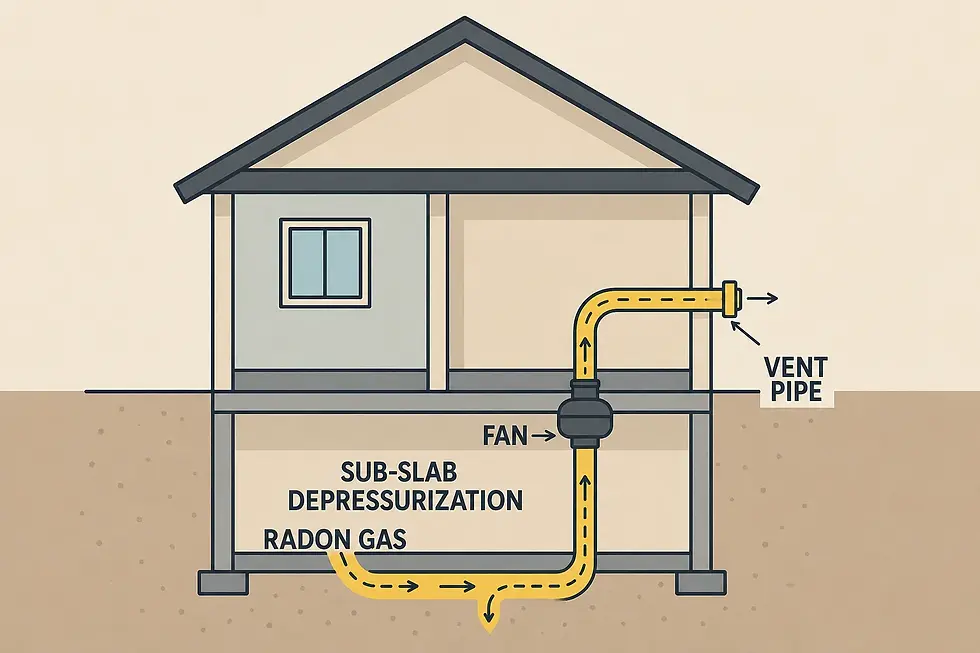
Radon is a naturally occurring radioactive gas that has no smell, no colour and no taste. You cannot see it or detect it without proper testing. According to Health Canada, long-term exposure to elevated radon is the leading cause of lung cancer among non-smokers and the second leading cause of lung cancer overall.
The good news is that radon is both measurable and manageable. If elevated levels are found, a professionally designed mitigation system can significantly reduce the amount of radon entering your home.
Ventilation Kings provides certified radon mitigation in Halifax and professional radon testing for homeowners across Halifax, Dartmouth, Bedford, Sackville, and surrounding areas.
What Is Radon?
Radon is produced naturally as uranium slowly decays in the soil beneath our homes.
As the gas rises through the ground, it seeks pathways into buildings.
Common entry points include:
Cracks in basement floors
Foundation wall cracks
Sump pits
Floor drains
Utility penetrations
Construction joints
Crawl spaces
Once radon enters your home, it can accumulate over time, particularly when windows remain closed during colder months. One of the biggest misconceptions among homeowners is that they would know if radon were present. Unfortunately, that's impossible because radon has no smell, no colour and no taste, the only reliable way to know your home's radon level is through a long-term radon test.

Why Does Radon Increase During the Heating Season?
One of the biggest reasons radon levels often increase during the heating season is something called the stack effect.
When your heating system warms your home, warm air naturally rises and escapes through the upper portions of the building. As that warm air leaves, it creates a slight negative pressure inside your home. Your house must replace that air somehow. Unfortunately, much of that replacement air can be drawn from beneath the basement floor. If radon is present beneath your home, this pressure difference can pull more radon inside through even tiny openings in the foundation. This is why many Halifax-area homes experience higher radon levels between October and April.
Why Halifax Homeowners Should Pay Attention to Radon
One thing we've learned from working in homes throughout Halifax Regional Municipality is that every home is different. We've seen neighbouring homes built by the same builder, on the same street, produce completely different radon readings. One home may test well below Health Canada's guideline, while the home next door may require mitigation.
Factors that influence radon include:
Soil composition
Foundation construction
Air pressure inside the home
Ventilation
Weather conditions
Air sealing
Renovations
Because every home is unique, assumptions aren't enough. Testing is the only way to know whether your family is being exposed to elevated radon levels.
Why October Is the Best Time to Test
Health Canada recommends performing a long-term radon test lasting at least 91 days during the heating season. Beginning your test in late September or October allows you to measure your home's radon level during the months when exposure is often highest. Testing during this period provides a much better understanding of the air your family breathes every day than a short-term test completed during warmer months.

Can New Homes Have High Radon Levels?
Absolutely. Many homeowners assume newer homes don't have radon problems because they meet modern building codes. In reality, newer homes are often built to be more energy efficient and airtight. While that's excellent for reducing heating costs, it can also reduce natural air leakage, allowing radon to accumulate if it enters through the foundation. Whether your home is five years old or fifty years old, testing is always recommended.
Does a Heat Pump Increase Radon?
No. A heat pump does not create radon. However, once homes are closed up for winter and heating systems begin operating regularly, pressure differences inside the home may increase the amount of radon entering if it is already present beneath the foundation. The heating equipment isn't creating radon. It simply contributes to the airflow patterns that make radon more likely to enter the home.
Does an HRV Remove Radon?
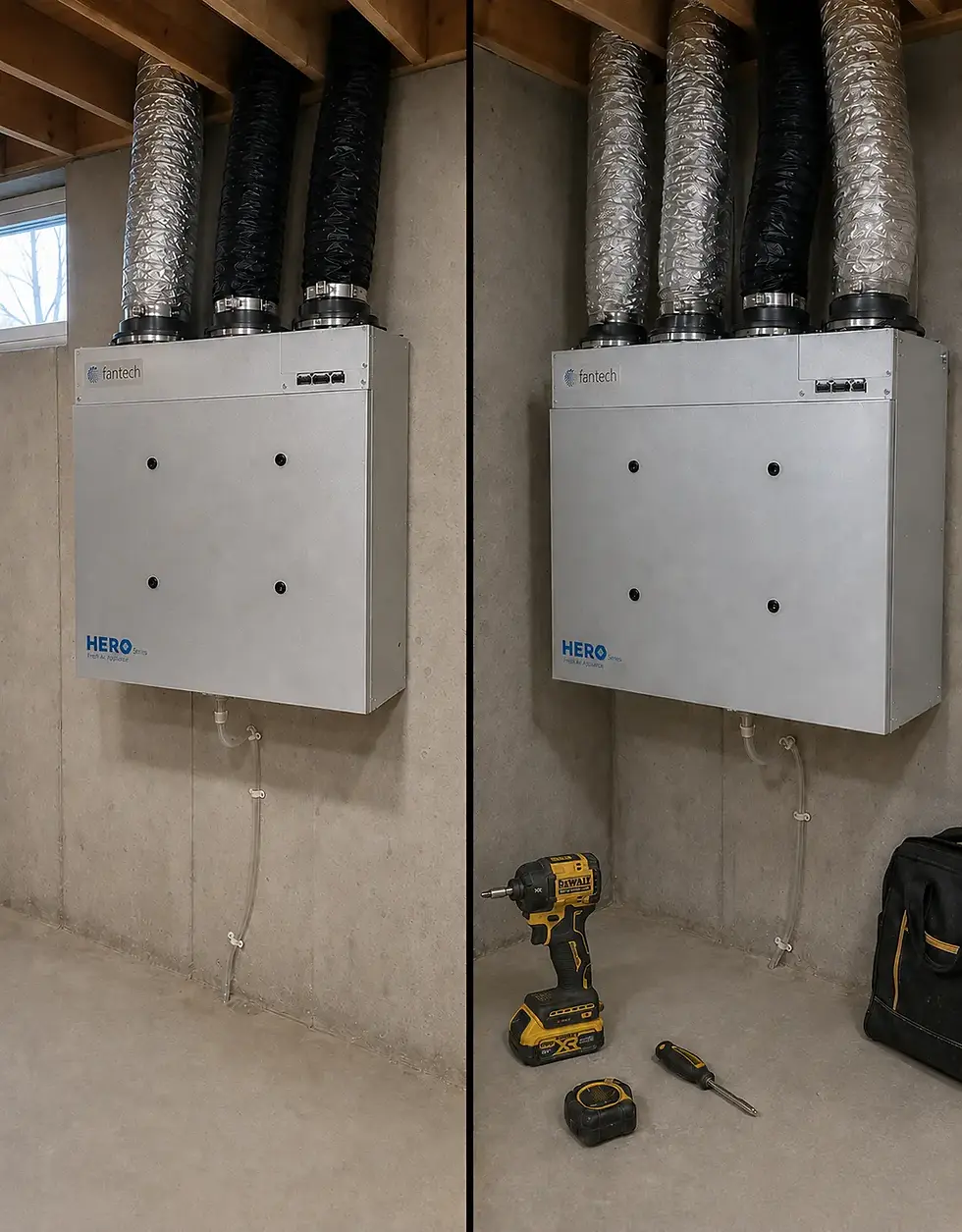
As specialists in both ventilation and radon mitigation, this is one of the most common questions we're asked. A Heat Recovery Ventilator (HRV) improves indoor air quality by replacing stale indoor air with fresh outdoor air. In some situations, it may help lower radon concentrations. However, if testing shows radon levels above Health Canada's guideline of 200 Bq/m³, an HRV alone is generally not considered an effective long-term solution. A professionally designed active radon mitigation system addresses the source of the problem by reducing radon before it enters your home.
What Happens If Your Radon Level Is High?
Finding elevated radon levels can be concerning, but it doesn't mean you need to panic.
The important thing is that you've identified a problem that can usually be corrected.
Most professionally installed radon mitigation systems reduce radon levels dramatically, often by more than 90%. Many residential systems can be installed in a single day with very little disruption to your home. After installation, follow-up testing confirms that the system is performing as intended.
Why Choose Ventilation Kings?
At Ventilation Kings, we help homeowners throughout Halifax Regional Municipality create healthier indoor environments through professional radon mitigation and ventilation solutions. Every home is different, which is why every mitigation system should be designed specifically for the home's construction, foundation and airflow characteristics.
Whether you live in Halifax, Dartmouth, Bedford, Lower Sackville, Fall River, Hammonds Plains, Timberlea, Cole Harbour, Tantallon, Beaver Bank or Windsor Junction, our goal is to provide honest recommendations, quality workmanship and long-term results.
Frequently Asked Questions
Is Halifax considered a high-radon area?
Yes. Elevated radon levels have been found throughout Halifax Regional Municipality and across Nova Scotia. Because radon varies from one home to another, every home should be tested regardless of its location.
What is the acceptable radon level in Canada?
Health Canada recommends taking action if your home's annual average radon concentration is above 200 Bq/m³.
Is there a completely safe level of radon?
Current research suggests that reducing radon exposure as much as reasonably possible is beneficial because risk increases with long-term exposure.
Can I smell or see radon?
No. Radon has no smell, colour or taste.
Can new homes have high radon?
Yes. New homes can have elevated radon levels just as older homes can.
Should I test if my neighbour's level was low?
Yes. Homes on the same street can have very different radon readings.
Does a heat pump create radon?
No. A heat pump does not create radon or bring outside air into your home. Standard air-source heat pumps simply transfer heat between the indoor and outdoor units using refrigerant. Radon enters homes from the soil beneath the foundation through cracks and openings. During the heating season, changes in air pressure inside the home can allow more radon to be drawn indoors if it is present.
Can opening windows solve a radon problem?
Opening windows may temporarily reduce radon levels but is not a practical long-term solution, especially during winter.
Does an HRV remove radon?
An HRV may reduce radon in some situations, but homes with elevated levels generally require a professionally designed mitigation system.
How long should I test?
Health Canada recommends at least 91 days during the heating season.
How long does radon mitigation take?
Most residential installations can be completed in approximately one day.
Should I retest after mitigation?
Yes. Follow-up testing confirms that your mitigation system is working effectively.
Does radon mitigation increase electricity costs?
A mitigation fan uses electricity, but for most homes the operating cost is relatively modest.
What areas does Ventilation Kings serve?
We proudly serve Halifax, Dartmouth, Bedford, Lower Sackville, Fall River, Hammonds Plains, Timberlea, Cole Harbour, Tantallon, Beaver Bank, Windsor Junction and surrounding communities across Nova Scotia.
Protect Your Home Before Another Heating Season
As homes become more tightly sealed during the colder months, now is one of the best times of year to understand your home's radon level. Testing today can provide peace of mind and help you make informed decisions about your family's long-term health.
If your results show elevated radon levels, choosing an experienced local contractor is the next step toward creating a healthier home.
Ventilation Kings proudly provides professional radon mitigation, radon testing guidance and ventilation solutions for homeowners throughout Halifax Regional Municipality and surrounding communities.
If your radon levels rise during heating season, contact our Halifax radon mitigation specialists to book a free home assessment.


